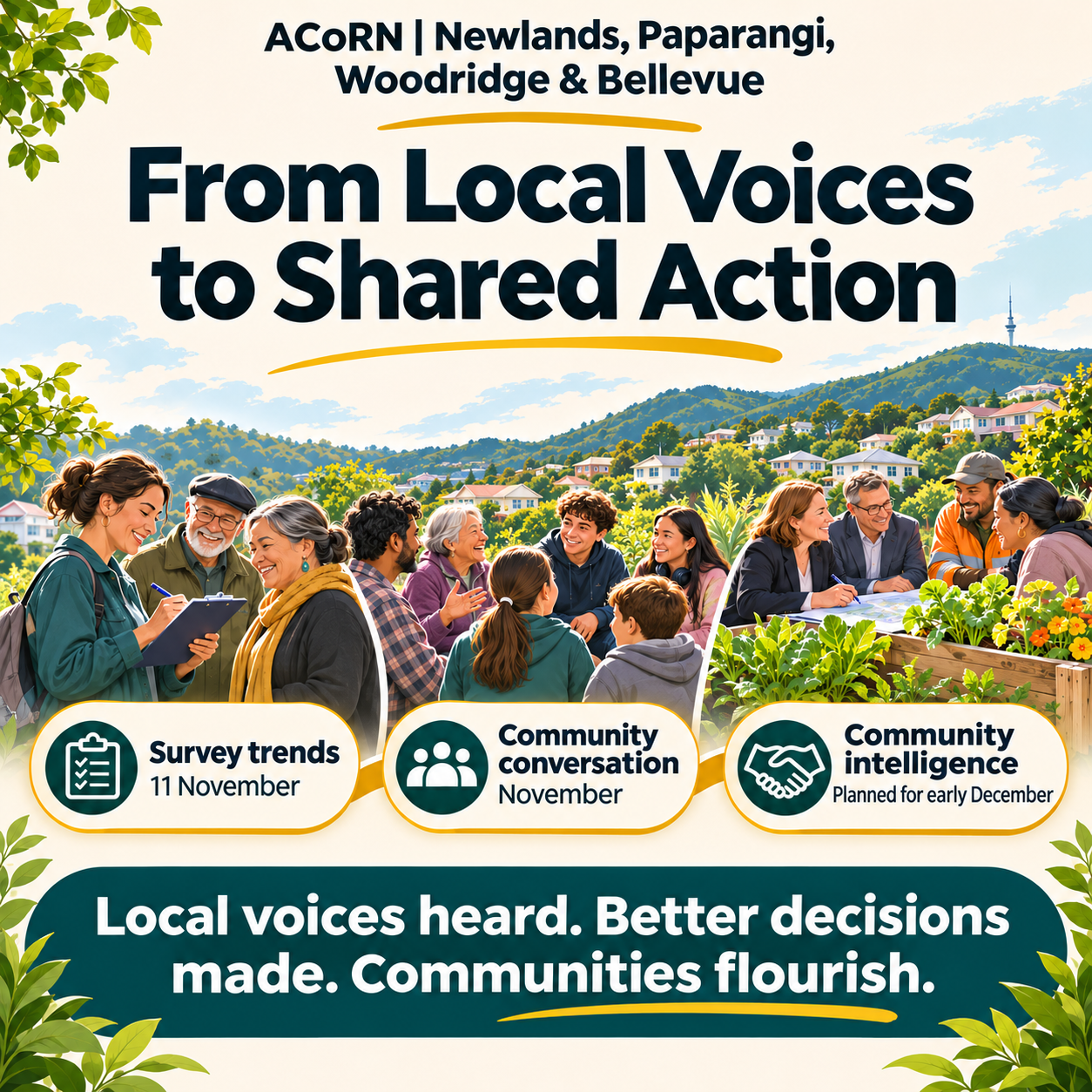
Our seventh annual community survey, using the Treasury Living Standards Framework, closes soon. Each response helps us understand life in Newlands, Paparangi, Woodridge and Bellevue, and what could help these communities flourish.
Thank you to everyone who has contributed. The next step is to explore the findings with residents and identify what we can do together.
Elections are an important opportunity to influence our future. Between elections, ongoing relationships and opportunities to inform decisions can help keep community voices present.
Understanding the survey trends
On 11 November, we will publish updated community survey results, including trends and projections to 2035, building on the 2019–2025 results. Drawing on the Treasury Living Standards Framework, the survey covers six resilience areas: economic, environmental, social, cultural, governance and disaster resilience.
The trends can show what is changing, while projections can help us consider what may lie ahead. Projections are not predictions of what will inevitably happen. Numbers alone cannot explain people’s experiences, and survey responses may leave some perspectives unheard. Conversations can help us understand the reasons behind the findings and recognise experiences the survey may have missed.
Exploring the findings with residents
ACoRN’s planned November community conversation will invite residents, including young people and whānau, to explore four questions: Why do the findings look this way? What could improve? How could we make progress? Who needs to be involved?
Some actions could begin within neighbourhoods, such as sharing skills, checking on neighbours, strengthening cultural connections or preparing households for emergencies. Community Connectors could help residents build relationships and organise these activities.
Other changes may need support from councils, government agencies, businesses, community organisations or elected representatives. Residents may identify barriers involving services, infrastructure, employment, environmental protection or participation in public decisions.
The conversation should help clarify what residents can take forward themselves, where partnerships are needed and what institutions are being asked to consider.
Helping community voices inform decisions
Bringing survey findings together with lived experience and local knowledge creates community intelligence. This could help representatives and agencies understand how policies and investment choices affect everyday life, complement other evidence before decisions and help assess their effects afterwards.
This exchange needs to work both ways. Institutions also need to explain their responsibilities, choices and constraints. Trust can grow when residents understand how their contributions were considered, what will happen next and why some requests cannot be progressed.
Publishing the findings and following through
In early December, we plan to publish community intelligence connecting the survey findings with residents’ explanations and proposed actions.
This could inform public decisions and planning for the proposed March–May 2027 trial of 40 Community Connectors across 20 neighbourhood groups. The trial remains subject to funding and readiness. Our investment brief outlines the opportunity to support this work, while the Step Change proposal sets out the wider ambition.
After publication, we will need to communicate clearly about agreed actions, responsibilities, resources and unresolved questions. Future surveys and conversations could help assess progress and guide adjustments.
Residents bring local knowledge and the ability to act within their neighbourhoods. Institutions bring authority, expertise and resources, alongside responsibility for their decisions. Working together gives us a way to turn shared understanding into practical improvements.
Local voices heard. Better decisions made. Communities flourish.